
Dental Crown Procedure: What to Expect at Each Appointment
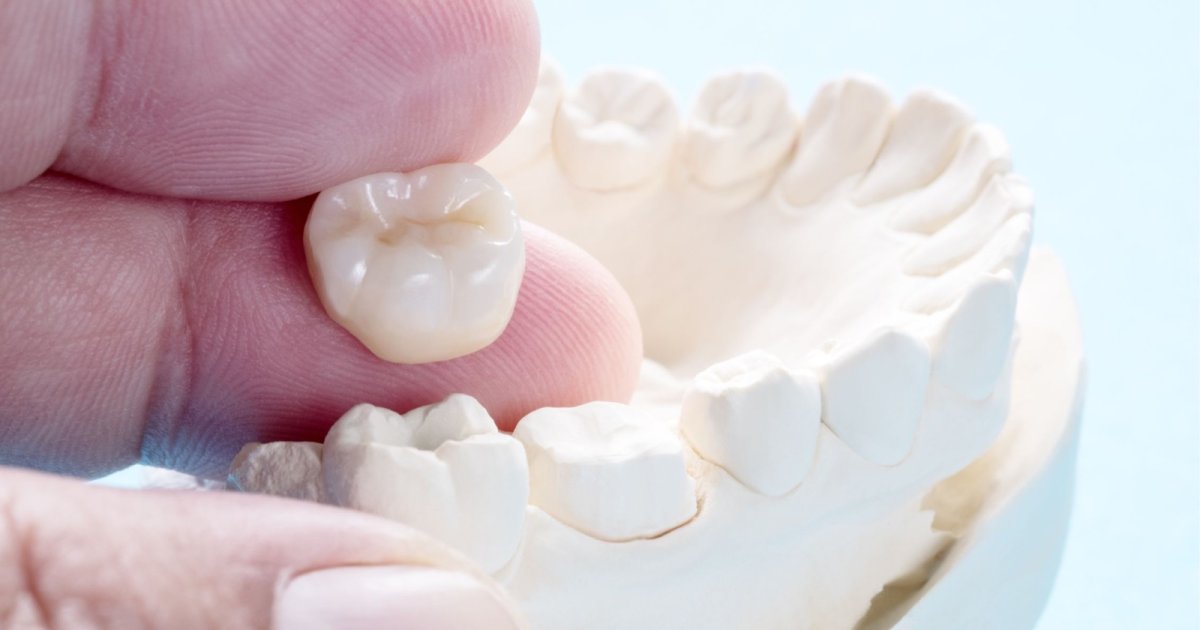
If your dentist has recommended a crown, it helps to know what the dental crown procedure involves before you sit in the chair. Healthdirect Australia advises that a crown is likely to take one or two visits (Healthdirect Australia, “Dental crown procedure”).
This guide walks through the procedure appointment by appointment. It covers planning, the first visit, living with a temporary crown, fitting the final crown, what a new crown feels like, and the risks and limits. It also says when to call the practice.
This article is general information only. Your dentist will explain what applies to your tooth, and the exact steps vary.
What is a Dental Crown, and Why Might You Need One?
A crown is a tooth-shaped cap that covers the part of a tooth above the gum. It restores the tooth’s shape and strength and protects what is left of it.
Your dentist may suggest one to:
- Protect a tooth weakened by a large filling or decay.
- Hold together a cracked tooth.
- Restore a broken or heavily worn tooth.
- Cover a tooth after root canal treatment.
- Cover a misshapen or discoloured tooth.
- Sit on top of a dental implant, or hold a bridge in place.
If you are weighing up a crown against a bridge, our comparison of dental crowns vs bridges explains the differences.
Before the Procedure: Assessment and Planning
Before any work on the tooth, your dentist will usually:
- Examine the tooth and take X-rays to check the root and the bone around it.
- Ask about your medical history.
- Check whether decay or gum problems need treating first.
- Talk through the type of crown and the material, such as porcelain, ceramic or metal.
- Explain how many visits to expect, the risks and the costs.
This is the time to ask questions, and to say if you are nervous. Local anaesthetic is commonly used for the preparation visit.
Dental Crown Procedure: Appointment by Appointment
Every case differs, but the dental crown procedure generally follows this pattern.
Appointment 1: preparing the tooth
- Local anaesthetic is used to numb the tooth and the area around it. Individual experiences vary.
- Cleaning and shaping. Decay or damaged tooth is removed, and the tooth is shaped so the crown can fit over it. If a lot of the tooth is missing, it may be built up first.
- Impression or scan. An impression of the tooth, or a digital scan, shows the crown maker exactly how the crown should fit and how your teeth bite together.
- Choosing the shade, so a tooth-coloured crown matches your neighbouring teeth.
- A temporary crown is fitted to protect the prepared tooth.
Tooth preparation removes some of the tooth, and this cannot be undone.
Between appointments: living with a temporary crown
The temporary crown is a stand-in while the final crown is made. It is not as strong or as precisely fitted as the final one, so look after it:
- Avoid sticky, hard or chewy foods, and chew on the other side where you can.
- Be gentle when cleaning around it, and be careful with floss.
- Call the practice if it comes off, feels loose or breaks.
The tooth can be sensitive between appointments, which is common.
Appointment 2: fitting the final crown
- Removing the temporary crown and cleaning the tooth.
- Trying in the crown. Your dentist checks the fit, the edges, the colour and how it sits against the teeth around it.
- Checking your bite, so the crown doesn’t sit too high. Small adjustments are common.
- Cementing it in place once you and your dentist are happy.
- Final polish and aftercare advice.
Local anaesthetic may or may not be needed at this visit, depending on the tooth.
If your crown is made in one visit
Some practices can make a crown in a single appointment, using a digital scan and a milling machine in the practice. Whether this is available depends on the practice, the tooth and the material. It doesn’t suit every case, and the steps of preparing the tooth, fitting and checking the bite are similar. Ask your dentist what is available and what suits your tooth.
How a New Crown Feels
A new crown can feel different at first, because it may be slightly larger or shaped differently from the tooth it replaces. Most patients adjust over time.
- The tooth may be sensitive to hot and cold for a while.
- Your bite should feel natural. If it feels high, or you are biting on the crown first, tell your dentist, because it can be adjusted.
- Your gum around the crown may be tender for a few days.
Caring for Your Crown
- Brush twice a day with a soft toothbrush and fluoride toothpaste, including along the gumline around the crown.
- Clean between your teeth daily, including around the crown.
- Avoid biting hard objects, such as ice or pen lids, with the crowned tooth.
- Ask about protection if you grind your teeth.
- Keep up your check-ups so your dentist can check the crown and the tooth underneath.
A crown covers the tooth, but the tooth and the gum around it can still develop decay and gum problems.
Risks and Limits of a Crown
All dental procedures carry risks, and your dentist should explain them before you decide. They include:
- Sensitivity, especially after preparation.
- Irritation of the nerve. In some cases, the tooth may later need root canal treatment.
- A crown that loosens, chips or breaks.
- Decay at the edge of the crown, where it meets the tooth.
- A bite that feels off and needs adjusting.
- A colour that doesn’t perfectly match the teeth beside it.
- Gum irritation around the edge.
A crown is also not a way back. The tooth underneath has been reduced, and it cannot be returned to how it was. Results vary between patients.
When to Call the Practice
Contact your dentist if:
- A temporary or final crown comes off or feels loose.
- Your bite feels high or uneven.
- Pain or sensitivity is getting worse, or doesn’t settle.
- You have swelling, a bad taste or a fever.
For swelling that affects your breathing or swallowing, call 000 or go to your nearest hospital emergency department.
Dental Crown Procedure FAQs
Does getting a crown hurt?
Local anaesthetic is used to manage discomfort during the procedure. Individual experiences vary. Some tenderness or sensitivity afterwards is common, and tell your dentist if you feel uncomfortable at any point.
Why do I need a temporary crown?
It protects the prepared tooth and keeps it in position while the final crown is made. A tooth left uncovered can be sensitive and can shift.
How many appointments will I need?
Often two, with a temporary crown in between, though some practices can complete a crown in one visit. Ask your dentist what applies to your tooth.
Can I have a crown after a root canal?
Often, yes. Crowns are commonly used to cover and protect teeth that have had root canal treatment. Your dentist will assess your tooth.
Book a Crown Consultation in Albury
Been told you may need a crown, or have a tooth you are worried about? The next step is an examination.
At Kreativ Dental Albury, your dentist can look at your tooth, review your X-rays, explain what a crown would involve for you and talk through your options before you decide on anything. You can also read about dental crowns in Albury.
Call us on (02) 6021 4171 or book online to arrange a crown consultation.
We are at 525 Wilson St, Albury NSW 2640.
Source: Healthdirect Australia, “Dental crown procedure”.
This article is general information and does not replace advice from a registered dental practitioner. All dental procedures carry risks. Results vary between patients. Ask your dentist whether treatment is appropriate for you.